Emmaus Europe

Emmaus in France

Interview with Annick Berthier, outgoing national delegate for France on the regional board of Emmaus Europe, alongside the new delegate, Pierre-Yves Lenglart.

Tell us in your own words about how Emmaus started out in France.

There was ONE MAN at the origin of Emmaus, Abbé Pierre.

One man who then brought another man on board, then 10 more, then 100 more, then thousands of other men and women working together to defend the cause of the poorest and most vulnerable.

For the curious minds amongst you who would like to find out more, the website of Emmaus International looks back at the origin of our international movement.

What different activities/initiatives are led by Emmaus in France?

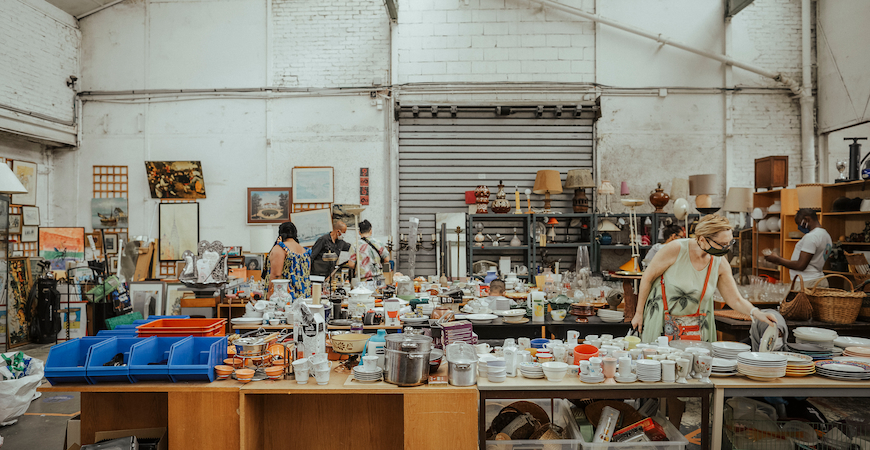
To give you a few figures Emmaus in France is 240 groups that are members of Emmaus Europe and a total of 480 sales areas. Some of the groups have several sales areas, up to 4 in fact. To give you an idea of the size of the movement in France, we have 6,893 companions (18% of whom are women) and 13,000 volunteers who are a key part of Emmaus in France! In 2020, 288,000 tonnes of merchandise were collected, a figure which has risen by 42% in the last 10 years. Of these 288,000 tonnes 45% is reused, 50% is recycled and only 5% is thrown away.

Our activities have changed a lot over the last 72 years! Emmaus started with the creation of the communities. The capacity and quality of the accommodation we provide has improved over time. We now have 120 Emmaus communities in France! In recent years we have observed a diversification of the economic models with the creation of many new activities: solidarity shops, organic shops, vegetable farming, etc. Alongside the community model other types of Emmaus groups have developed over the years. Get back to work schemes have been a growing presence on the Emmaus landscape here in France. More and more experiments have been launched: pilot initiatives and spin-off initiatives, notably in the sectors of new technologies, environmental protection, equal rights and protection of the most vulnerable.

Our traditional activities to provide housing and offer social initiatives are still a key part of what we do, notably via the access to housing initiatives and the advocacy work led by the Abbé Pierre Foundation both in France and abroad. Other initiatives include our access to dignified housing activities and the emergency housing provided by Emmaus Solidarity.

The activities led by the Emmaus groups in France are diverse and continue to branch out as the years pass by. New groups with new ideas continue to emerge. It is hard to list all of our initiatives here because Emmaus is always on the move!

What challenges are the French Emmaus groups currently facing?

The French groups had to overcome the health crisis by being resilient, just like everyone else. The closures of our sales areas led to a drop of income but this was partially offset by support from the French State and by donations from the general public.

The health crisis further outlined, to those who were still unaware, the situation of rampant poverty we are currently struggling with in France. Lots of “little jobs”, notably for young people, were lost, temporary contracts were terminated and a lot of black market work disappeared, notably for the undocumented. This situation is very concerning.

In terms of our economic activities the French groups have also had to deal with increased competition in the recycling and reuse sector. Second-hand is fashionable at the moment, notably amongst young people, both as a new consumption model and as a cheaper option for those who lack the resources to always buy new. More and more second-hand object websites are being created and major brands are launching special second-hand areas in their shops…All of these stakeholders are helping to spread the message and force us to continue to innovate!

The French groups, especially our communities, host a significant amount of immigrants who have an irregular immigration status and who are often called “undocumented persons”. A lot of these people are homeless or live in makeshift camps. Their arrival in the Emmaus groups has changed the landscape of the groups as most of these people do not wish to stay with Emmaus for the long term as a lot of our companions used to. This means we will have to change the way we work.

How have things been going for you since the Covid outbreak and how have you adapted to the situation?

Covid-19 led to us being more careful with hygiene, trying to respect all of the health measures recommended by the authorities. The pandemic meant we sometimes had to close our sales areas but the groups took this seriously, adapted well and our activities have now bounced back!
© Emmaus Roya
France News

© Nathalie Bardou/Hans Lucas

Emmaus Lublin: success for our solidarity pizzeria!

This Polish community diversified its activities recently by opening an Italian/Turkish restaurant. This new adventure has been a great success and Zbigniew Drążkowski, the group leader, and Ela Guc, admin manager, have been telling us all about it.

We decided to create a pizzeria in May 2014. At the start it seemed like something a bit different and we ourselves thought it was a little bit crazy! But we started talking about it at board level, with our colleagues and with the companions. We looked at the pros and cons and we calculated the costs, the staff needs, how we could organise it and the likelihood of success, amongst other things. After two months we organised a meeting of the entire community: the companions, the staff members and the boards of our three organisations (the foundation, the association and the cooperative). The debate was followed by an anonymous vote, open to all no matter their position in our group (just under 50 people in total). But despite the concerns outlined during the debate 100% of the votes were in favour of going ahead with the pizzeria!

We thus started to implement the project. We rented a premises, we did all of the technical and technological documentation required of us and we got the green light from the authorities. We did the majority of the construction work ourselves – some of the money came from our own funds and some of it came from the Labour Department – and then we equipped the site. We chose the name Al lago by Ivo (“By the Lake, By Ivo”) as a tribute to the famous chef who has been working as our partner on this project).

A famous Italian chef living in Lublin, Ivo Violante, provided us with 2 weeks of training on how to prepare pizzas, salads and pastas. In parallel another chef, David Reiser, trained the team on Turkish cuisine (kebabs, tortillas, pitas). 13 March 2015 was our big opening day. Fortunately Ivo was there working with us for the first weekend because we wouldn’t have been able to do it without him… Even after just a few weeks the local newspapers were already ranking us as the best pizzeria in Lublin, a town of almost 400,000 people. We still lead the way and we are now trying to widen our menu whilst always keeping an eye on the quality of the products we buy by purchasing from an Italian wholesaler. We continue to try to improve the conditions for our customers. During the pandemic we couldn’t have any customers eating inside the pizzeria, of course, but our income only dropped by a very small amount thanks to takeaway orders. 12 people work in the pizzeria on a rotating basis, half of them are members of the community whilst the rest of the staff are mainly students.

Last year, in May 2020, the premises for our pizzeria was put up for sale so we took this opportunity to buy the entire property – in addition to the restaurant the property came with a living area and a nice garden. We borrowed 110,000 euros for this purchase from a fund for the development of social enterprises (it was almost interest-free) and the remaining amount of 37,000 euros was covered by the pizzeria itself. We now have 7-8 companions living in this property.

Thanks to the pizzeria project we have been able to diversify our income-generating activities as well as being able to teach some of the companions a new trade and to offer more housing space. We have a few concerns with the pizzeria at the moment during this uncertain period but this project provides us with great satisfaction. We have now renamed the pizzeria Al lago by Emmaus!

News Poland

© Emmaus Lublin

Emmaus International is publishing its first Global Report on its fight against poverty

In its first Global Report, Emmaus International is making the voices of the most excluded heard, presenting alternatives and demands, and launching a new appeal against the causes of poverty.

To mark the International Day for the Eradication of Poverty, on 17 October, Emmaus International is releasing “Our Voices”, the first Global Report by Emmaus on its fight against poverty. Another report? No, a wake-up call! Because as Abbé Pierre, our founder, explained “the voice of those who are voiceless should keep the powerful awake at night”. Faithful to this tradition 50 years on, the Emmaus movement wants to make its voices and its claims heard.

We believe that 150 million more people will fall into extreme poverty in the wake of the Covid-19 crisis (source: World Bank), with production and consumption models leading to rapid environmental degradation and increasing human suffering. Against this backdrop, Emmaus International is highlighting the solutions put forward by the 425 Emmaus groups around the world. Throughout this report, you will discover the islands of hope these solutions represent for excluded people and for all those who believe in the existence of credible alternatives to the dominant model.

What do the Emmaus organisations have in common in Brazil, India and France, and in each of the 41 countries where we work? Common requirements and claims to tackle poverty and exclusion. This report reiterates – as it seems to have been forgotten – that poverty is neither inevitable nor a natural phenomenon. It invites decision-makers to draw inspiration from the real-life experiences of Emmaus organisations worldwide and to listen to the solutions that they propose. Because fighting poverty means transforming the system that causes it!

To find out more about this report and sign our appeal, visit: ourvoicesmatter.emmaus-international.org

News Tackling Poverty / Solidarity

Emmaus in Belgium

A discussion with Julio de la Granja, national delegate for Belgium on the board of Emmaus Europe.

Tell us about how Emmaus began in Belgium. 

In Vivegnis, a suburb of Liège, William Wauters and his friends took action in 1949 to support poor families who were still suffering in the aftermath of WW2. They renovated hovels as well as distributing coal, food and clothing. Their efforts eventually led to the creation of the first Emmaus community in Belgium, the Emmaus-Brasier community.

In 1960 the Belgian economy got back on track and daily life began to improve for our people. The community thus decided to focus on helping countries from what we used to call, back then, the “third world”, and they launched the “Terre” [Earth] group. This group set up income-generating initiatives in order to improve the living conditions for the local people for the long term. Terre began to move away from the Emmaus movement in the 1990s but the Emmaus adventure is still alive in Belgium nonetheless!

The working community in Ghlin and the Emmaus community in Brussels were both founded in 1957. Following the death of the leader of the Brussels community and upon a request from Abbé Pierre, the La Poudrière community took on the responsibility for the community in our capital in 1975. This community had remained independent from the movement since it was founded in 1958 but it joined the movement through this merger in 1975. In the 1960s two new communities emerged in the region of Charleroi: the Marchienne-au-Pont and Lodelinsart groups. The Lodelinsart group closed in 2018.

We now have 3 Emmaus groups in Belgium: Marchienne au Pont (Charleroi), Ghlin (Mons) and La Poudrière with its 3 sites (Brussels, Péruwelz and Rummen farm). We have 4 sales areas and over 140 people involved in the movement in our country!

What types of activities and initiatives are led by Emmaus in Belgium? 

In Belgium the three Emmaus groups are all traditional Emmaus communities. We have 60 companions living and working in our 3 groups. We lead the traditional Emmaus activities of collecting, sorting and selling second-hand objects. Combined, our 3 associations collect around 1,000 tons of furniture, clothing and electronic goods per year, 70% of which are brought back into circulation in our shops.

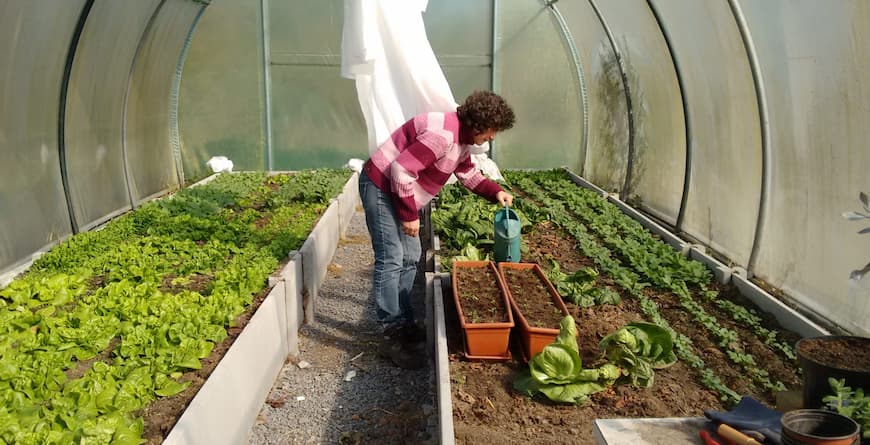
The La Poudière community has also been doing a lot of work at Rummen farm since 1964. We rented this farm, based in the Flemish region of Belgium, in order to produce fruit and vegetables and to rear livestock (pigs, sheep and hens) to feed the community. Nowadays we produce 50 tons of apples, 5,000 bottles of apple juice, pears and prunes at the farm every year. We sell our produce in our shops in Brussels and Péruwelz.

Over the last three years we have been working to develop the bike part of our activities in Brussels, work which has been recognised by the regional authorities. Our workshop where we fix and sell bikes is open to the general public 5 days a week. The majority of the bikes we sell are collected by the community from local recycling centres before being fixed in our workshop and then sold on.

Our community in Ghlin was concerned about the environmental and economic impact of producing waste and thus sought out innovative solutions to this issue. For several years they have been taking action to reduce their environmental impact (collecting rainwater, improving the insulation of their buildings, carefully managing their heating system and installing solar panels) but recently they were looking for an idea for how to better promote recycled wood, similar to their work with clothing, books and electronic goods. This innovative project, launched by a collective that wishes to add value to second-hand wood thanks to their collaborative carpentry workshop, is called Holy-Wood. They also create eco-design furniture and have opened a shop selling environmentally-friendly products.

In addition to our local initiatives several important events for our movement have been held in Belgium over the years. The world assembly was held in Namur in 1984 and the regional assembly was held in Brussels in 2009. These general assemblies are important moments where members of our movement come together for debates and to take key decisions.

What are the current challenges for the Belgian groups?

Our 3 communities were all created more than 60 years ago and their current leaders have been involved in the movement for many years. We mainly offer welcome to undocumented persons because Belgian residents have access to a lot of social support from the central government and from the local authorities. The people we welcome often leave our communities once they are granted the right to stay in Belgium, they don’t see Emmaus as part of their long-term plans.

Our three communities are, therefore, coming to a crossroads and we must find people to lead our associations for the years to come. This is already beginning to take shape as certain roles within our groups are becoming more professional (the role of driver and admin roles, for example) and thanks to partnerships with other associations.

Notable partnerships include:

  • The L’Ilôt house which has set up a partnership with our Marchienne-au-Pont group for support in managing community life
  • The Compilothèque, an association of artists which has set up a partnership with our group in Brussels. They rent part of our premises and help us with the daily activities of our community
  • The Scheldt Plains Nature Park, an environmental association working in this park along the border with France uses office space at our Péruwelz site and helps us with our work with wood and with our orchard in Péruwelz
  • The Terre group, which used to be a member of Emmaus, buys surplus clothes from our Péruwelz site

Generally speaking it is important that we pass on values such as giving, sharing and fraternity to young people. These values are brought to life in Thierry Coppée’s fresco, ‘L’entraide’, based on his comic book series called ‘Les Blagues de Toto’. The fresco was made for the 60-year anniversary of the Ghlin community. For the last 13 years the La Poudrière community has been running summer camps at Péruwelz, generally hosting around 10 young people at the site over the first two weeks of August. We also host young people doing their Belgian civic service at La Poudrière for periods of 6 months. All of these initiatives will help ensure that young people will soon take over the leadership of our communities.

How have you been managing since Covid-19 struck and how have you adapted to deal with the situation? 

In 2020 and at the start of 2021 we had to stop our collections several times due to the Covid situation. Our shops were either fully closed, half open or completely open, depending on the measures put in place at the time by the Belgian government.

During lockdown we had to stop all activities taking place outside and just focus on jobs that we could do inside the communities: cleaning up the shops, focusing on the environment and doing some gardening. It was a tough period but the whole experience actually brought us closer together!

From an economic point of view, yes, we lost income during the Covid crisis but our expenditure was also lower during this period. Whenever we could start selling again our customers came in number, ensuring that we got plenty of money in. Our shops are now open as usual once again and our activity is back to normal. Emmaus Ghlin, however, cannot yet do collections from the general public due to social distancing measures, so it’s a little bit more difficult for them. But, overall, the situation in the communities is pretty good!

Belgium News

© La Poudrière Emmaus