


Europe’s first anti-poverty strategy!
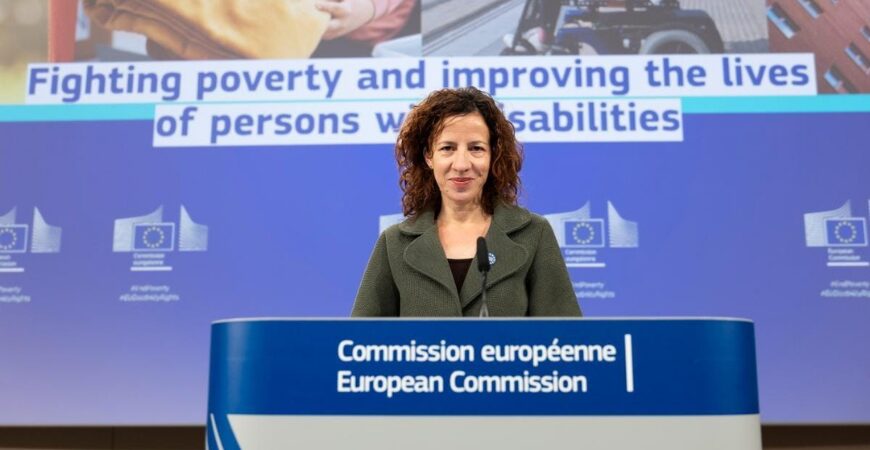
On 6 May 2026, the European Commission published EU’s first-ever anti-poverty strategy. This marks a significant and long-awaited step forward in the fight against social exclusion.
Together with our partners in the European Anti-Poverty Network (EAPN) and the coalition of NGOs to which we have contributed, Emmaus Europe welcomes the progress and commitments set out in this strategy. We do, however, have serious concerns. The lack of a comprehensive long-term vision and adequate resources undermines the Commission’s stated objective – to eradicate poverty by 2050.
Recognition of the role of social economy, a focus on children, progress in tackling homelessness and the fight against discrimination.
Among the principles for effective anti-poverty policies (to be implemented at national level), it is proposed to support employment and social inclusion services provided by social enterprises, and to develop practical skills related to employability. This approach is directly in line with the work of the Emmaus groups. Our members can use it to strengthen their influence on public policy – particularly as national anti-poverty coordinators are set to be appointed at the highest political level in every European country.
The strategy also reveals ambitious targets regarding child poverty, with the aim of breaking the cycle of exclusion from a very young age. In practical terms, it plans to strengthen the European Child Guarantee (by improving access to healthcare and social support), to broaden access to public services for all children, and to extend support during their transition to adulthood.
Another positive aspect is the recognition of the need to combat discrimination and stigmatisation, which both contribute to exacerbating poverty. It identifies the groups most at risk of social exclusion – women, racialised communities and ethnic minorities (including the Roma people), LGBTQIA+ people, people with disabilities and children.
It is also worth noting that new avenues are opening up to better tackle homelessness and housing exclusion. A recommendation from the Council on housing exclusion is being proposed, and the European Platform on Combatting Homelessness is being maintained.
But there is a lack of systemic review and funding
Nevertheless, the strategy pays little attention to effective, adequate and targeted access to essential services, nor to strengthening the provision of public and social services. Instead, it prioritises increasing incomes and purchasing these services on the market. The strategy fails to take account of the decline in social services in some Member States. This is a major shortcoming. High-quality public services (accessible to all) remain an essential prerequisite for eradicating poverty by 2050.
Above all, the strategy lacks a structural and systemic approach. It focuses primarily on the individual experience of poverty and offers few solutions for those who will remain excluded from the labour market. Key factors such as taxation, wealth redistribution, labour market structures and systemic discrimination are not analysed. This limits its ability to tackle the root causes of poverty in a comprehensive manner, and undermines its potential for transformation.
Funding, however, remains uncertain. The strategy relies on the willingness of Member States to make better use of existing European funds – such as the European Social Fund (ESF) – without creating new sources of funding. Furthermore, negotiations on the 2028 – 2034 Multiannual Financial Framework (MFF) are still ongoing, and there remains considerable uncertainty regarding the budget that will be allocated to social inclusion and the eradication of poverty.
© European Union, 2026, sous licence CC BY 4.0