Emmaus Europe

European Pillar of Social Rights Action Plan

The European Commission published its action plan for the European Pillar of Social Rights (EPSR) on 4 March 2021. This plan is meant to fulfil the promise made by the European Parliament, Council and Commission in 2017 that Europe’s unique economic and social model will create prosperity and opportunities for all.

The action plan sets out three headline targets – on the topics of employment, skills and social protection – to be achieved by 2030, with the main objective being the fight against poverty and social exclusion. According to the plan these targets will be transformed into various laws (directives) and sub-action plans in the coming months.

The European Anti-Poverty Network (EAPN), that Emmaus Europe is a part of, has published an initial reaction to this action plan and has announced that a more in-depth analysis will follow. Here is what the EAPN has said about the action plan’s three headline targets:


Poverty Reduction

This target aims to reduce the number of people at risk of poverty or social exclusion by at least 15 million by 2030, out of which at least 5 million should be children. EAPN considers it essential that a poverty reduction target is one of the only three headline targets, however, the aim of reducing the number of people at risk of poverty or social exclusion by at least 15 million by 2030 is a significant scaling back of the ambition of the Europe 2020 target of 20 million, especially in the context of Covid-19 pandemic.


Minimum Income

For EAPN it is crucial that the action plan contains an initiative for a Council Recommendation on minimum income in 2022 to effectively support and complement the policies of Member States. Since this is no time for business as usual, EAPN strongly regrets that the action plan does not include a Framework Directive on Minimum Income, as a binding EU legislative proposal.


Further Initiatives

EAPN is also glad to see the action plan containing several initiatives relevant for the fight against poverty and social exclusion, such as an EU Strategy on the Rights of the Child, a Council Recommendation establishing the European Child Guarantee, a European Platform on Combating Homelessness or an action plan on the Social Economy.


A More In-Depth Analysis to Follow

Not least in the light of the devastating economic and social consequences of the Covid-19 pandemic, in upcoming in-depth assessments EAPN and its members will reflect on three key questions:

1. Can the action plan deliver on these promises and expectations, when it comes to the much-needed fight against poverty and social exclusion?
2. Can it help guarantee that everybody has the right and access to an adequate and enabling minimum income?
3. Can the different key initiatives effectively contribute to an improved rights-based access to social protection and affordable public services, including on health, care, housing and energy?

European Union News Tackling Poverty / Solidarity

Emmaus on Reunion Island

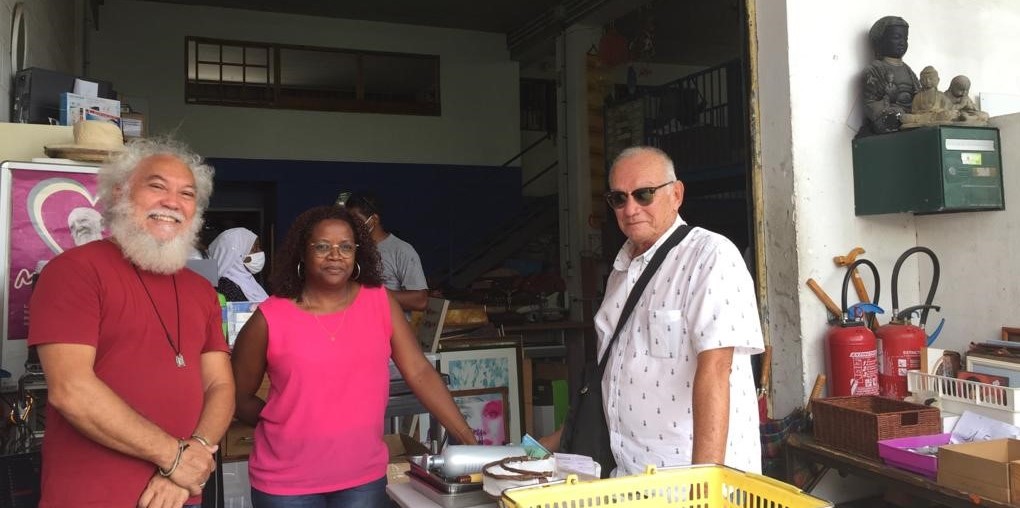
Dialogue based on interviews held with William Caro, Bernard Grondin, Sandrine Techer and Nelly Calimoutou of Emmaus Reunion as well as with Emmanuel Cazeau and Wilfrid Bertille of Emmaus Grand Sud and with Bruno Pichon of Agame.

Reunion is a French island in the Indian Ocean. Nearby Madagascar stands between the island and continental Africa. When the French first came to the island it was uninhabited, which may explain why there isn’t much of an independence movement on Reunion Island today. The French did, however, bring across slaves from various African countries as well as from Madagascar and set up an economy on the island based on the single-crop farming of sugarcane. Slavery has marked the history of Reunion Island and is the cause of certain economic and social inequalities which still exist today.

One of the main problems on the island currently is unemployment, over 22% of the population were out of work in 2020, including 44% of the 15-24 age group. Reunion is also heavily affected by excessive consumption and is highly dependent on imports, especially for food.

What is the history behind the Emmaus groups on Reunion island?

The first group on the island was created following the closure of an open air landfill site near the town of Saint-Denis. The population of the nearby shantytown, an area full of temporary houses that was being renovated, called the landfill their “factory” until the 1970s because what they collected from the site helped them to make a living.

Back then the current director of the Emmaus Reunion group was a social worker in this neighbourhood. After meeting Abbé Pierre in 1994 and thanks to support from 5 French groups and from the Abbé Pierre Foundation he and a team of volunteers were able to launch the Emmaus Reunion Les Papillons group (“Papillon” was the name of the former shantytown). The new Emmaus group provided work to around 10 families of rag pickers who had been forced to leave the landfill site, helping them to keep their heads above water.

A second Emmaus group on the other side of the island, an association which led solidarity activities for the excluded and which was starting to create work thanks to reuse, became part of our movement in 2012. The group, Emmaus Grand Sud, now runs its income-generating activities at Saint-Pierre but its solidarity shop and its welcome centre are still based at Saint-Joseph.

A third group recently joined the Emmaus movement as a trial member. This association reuses IT and telephone equipment and provides IT training to the digitally excluded. The group, called Agame, is based in the town of Le Port where unemployment has reached 50% amongst the 15-24 age group. The name, Agame, is the name of a lizard which plays a key role in the ecosystem but which is currently endangered. The group’s objective is to overcome the current situation where there is, on the one hand, excessive consumption in the region, and, on the other hand, a lack of equipment amongst certain groups of people.

What is the main activity led by the groups on Reunion island?

The two full member groups reuse textiles and objects donated by the local residents. Their main source of income is the textile activity, representing 60% of Emmaus Reunion’s total income. On top of this income-generating activity Emmaus Grand Sud also leads a re-integration scheme whereby members of the group fix large electrical devices for poor families. Emmaus Grand Sud also operates a welcome centre in Saint-Joseph which provides support for around 300 regular beneficiaries.

Emmaus Reunion tried, for many years, to maintain a team of staff members from poor neighbourhoods and who had a low level of education, allowing these people to have greater stability and to learn key skills within Emmaus. But the state subsidies for this type of contract came to an end, forcing them to limit their team to just 30 staff members and leaving them unable to bring in new people. The group will soon be launching a re-integration scheme in order to support more people who are in difficulty.

What are the current challenges on the island?

The health situation with Covid is better on Reunion than in many other countries as it is located quite far away from its Indian Ocean neighbours, making it easier to track all those entering the island. All arrivals are asked to take a Covid test before setting off and must then take a second test upon arrival.

Apart from during the first lockdown in March-April, which led to them losing two months of income, the groups on Reunion island have been able to continue with their activities almost as normal (whilst using social distancing measures).

To bounce back from the lockdown the groups decided to widen their opening hours and have restructured. The two full member groups are also looking at how to expand in order to develop their income-generating activities and to maintain their financial independence.

The Agame group has been busier than ever during the health crisis, mobilising the entire team to provide computers to 500 young people in Le Port so that they can continue with their education remotely. The group has also provided IT training to these young people and their families as well as maintaining its other projects.

Emmaus Reunion would like to open a library in the future which would focus on works about creole culture, the history of the Indian Ocean and the struggles against slavery and against colonisation. The group has built up a huge collection of books over the years. Emmaus Reunion would like to have more political debates with the local people as well as continuing to organise debates on social and cultural matters.

The three groups are trying to work together more often: they will soon be launching a website to sell their items (M’i Emmaüs) and they came together to provide solidarity to Madagascar in 2020 with ‘Operation Kéré’. They are also considering further cooperation with other groups in the region.

Tips and Clever Ideas

  • Emmaus Reunion Les Papillons is located close to the airport meaning that they receive all the objects that people are not allowed to take onto the plane and which are confiscated at customs. The group has thus become one of the best places to go to buy hiking poles, lava stone pestles or Swiss army knives – they’ve got loads of them!
  • Emmaus Grand Sud has put up screens next to the queue for its tills showing videos about the history and values of our movement.

You can find out more here:
France News

Bernard Grondin, Nelly Calimoutou, William Caro, Emmaüs Réunion.

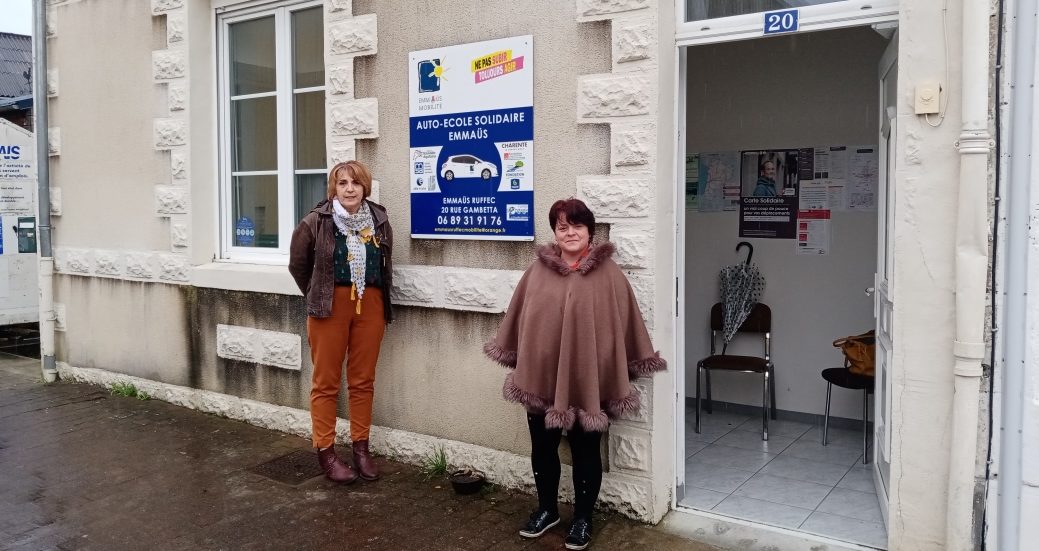
Emmaus Ruffec, solidarity mobility

Since 2009 Emmaus Ruffec has been leading an initiative to tackle a widespread issue, that of mobility. This group is based in a very rural area classified by the French government as a ‘rural area to be revitalised’ and where the unemployed and poor people suffer from mobility issues (the public transport offer is meagre and very few people in the region walk or cycle as a means of transport).

Following a large number of requests for mobility support Emmaus Ruffec launched a solidarity moped rental scheme, providing mopeds to people upon prescription from a social worker. Mobility is a key ingredient to help people get back on their feet and thus the number of mopeds, the services the group offers and the area covered by the scheme has developed over time. In 2017 the association opened its first solidarity driving school in partnership with the local authorities and with funding from the EU as part of the European Social Fund.

This scheme ensures that everyone in the local area is able to learn to drive by helping those with economic, social or cognitive difficulties to get ready for their test. Those involved pay 25% of the total cost of their driving lessons, which normally cost around €1,200 in France. Every year around 120 people, selected according to social criteria, are provided with support for their driving lessons. The group’s mobility advisor also carries out around 150 mobility diagnoses per year in order to try to solve any transport difficulties which can hold people back both socially and professionally.

The important addition of the mobility advisor role was made possible thanks to how these services are set up in the area. France has national mobility platforms which provide national solidarity for mobility: driving schools, rental services and social support. But when the local authorities announced they would be hiring a mobility advisor in 2018 Emmaus Ruffec offered to manage this service. It seemed like a logical next step given that the group already provided both a social rental service and a solidarity driving school. This addition also helped the group to become a more comprehensive mobility platform and the area covered has also doubled recently thanks to the creation of a branch in Confolens.

The mobility department currently includes 6 members of staff including 1 person on a subsidised contract and the team also benefits from the support of its committed volunteers. Emmaus Ruffec would like to further expand the team in 2021, recruiting a third driving instructor in order to be able to open another branch (this is something that local politicians have been asking for) as well as making the Fleet Manager position a permanent one as the group plans to increase the number of vehicles available for rental. Emmaus Ruffec is also encouraging the local people to donate old cars as long as they are in working order or can be easily repaired by the group’s members. The adventure continues!

France News Tackling Poverty / Solidarity

© Emmaus Ruffec

“COVID-19 Supercharging Poverty” | EAPN Poverty Watch 2020

The European Anti-Poverty Network, of which Emmaus Europe is a member, just launched their EU Poverty Watch 2020.

The Poverty Watches start from the reality of people experiencing poverty and the perspectives of NGOs who work with them. With poverty predicted to rise to at least levels seen in the 2008 crisis, and the EU Action Plan on the European Pillar of Social Rights and Recovery and Resilience Plans around the corner, the time is now to get poverty elimination right.

What is the EAPN Poverty Watch report?

The EAPN Poverty Watch Reports do not attempt to provide a comprehensive academic report on poverty. They start from the reality of people experiencing poverty and the perspectives of the NGOs that support and work with them: our 32 EAPN national networks and 13 European Organisations members. Their main objectives are to:

  1. To monitor key trends and policy on poverty and social exclusion in Europe
  2. To raise awareness about priority issues and impact/reality for people experiencing poverty
  3. To propose concrete recommendations backed by example and evidence

Covid-19 Supercharging Poverty

The Poverty Watches 2020 have an additional goal: on the one hand, to present the current trends of poverty and social exclusion, and additionally to reflect on the impacts of the COVID-19 pandemic and government measures, on people experiencing poverty and social exclusion. The EU Poverty Watch report assembles the key messages from the state of play of poverty amid the pandemic.

Key messages:

  • Poverty is a violation of human rights driven by inequality.
  • COVID-19 increased existing inequalities.
  • Governments are prioritising businesses rather than protecting people and failing to ensure an adequate income for all.
  • Precarious workers are some of the biggest victims – whilst a majority of essential workers are poorly paid.
  • Minimum Income and Social Protection is still failing to protect people from poverty, despite welcome temporary increases of levels and coverage.
  • COVID-19 has exposed inequalities of health and lack of universal access to affordable health and care. Poverty is a key social determinant.
  • Lack of affordable housing, rising energy, food and other essential costs are forcing people into unacceptable choices.
  • COVID-19 is increasing inequality in education and lifelong learning (LLL) systems.
  • Lack of clear social/poverty impact analysis. COVID-19 is exposing the need for all policy proposals to have a clear social impact assessment.
  • Social NGOs/community sector offer a lifeline to people facing poverty, but are overstretched and under threat.

More information : https://www.eapn.eu

European Union News Tackling Poverty / Solidarity

© EAPN