Emmaus Europe

Emmaus in Germany

Extracts from an interview with Serena Lemmens, national delegate for Germany on the Regional Council of Emmaus Europe.


Can you tell us about how Emmaus began in Germany?

In 1959 we had the first action led on behalf of Emmaus: a collection in Cologne on 1st March. This date marks the beginning of Emmaus in Germany.

Some young people from Cologne had met Abbé Pierre in Verviers in Belgium. They took part in a youth camp run by former resistance fighters in support of abandoned German children and were also involved in a big Emmaus collection. After discussing this experience in German newspapers they started to receive many requests to come and collect goods and thus they organised the first collection in Cologne. Shortly afterwards a community of volunteers was set up.

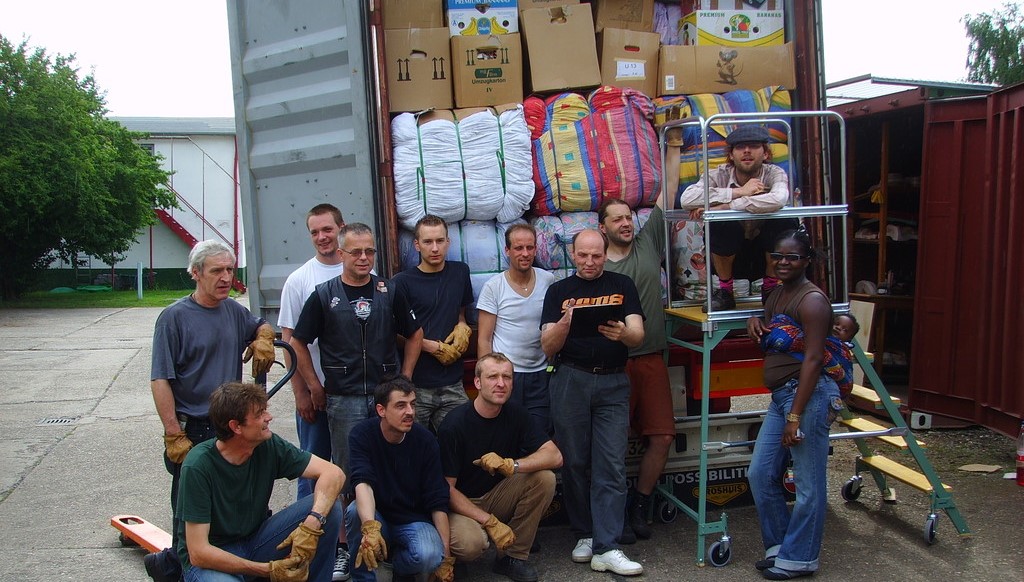
Today we have 3 communities and 2 trial member groups in Germany, all in the central-west region of the country. These groups are made up of 30 companions, 21 employees, 139 volunteers and 10 subsidised workers, and live off the proceeds of the sales of second-hand goods.

What activities are led by Emmaus in Germany?

The main activities led by the Emmaus groups in Germany include: running the communities with all the associated challenges and problems, operating second-hand shops, managing a day centre for 50 people in need and running a soup kitchen (preparing and distributing food for homeless people). Our trial member group near Cologne, Emmaus PUNTO, focuses particularly on the issue of drug addiction, helping people who have been through rehab.

We lead other activities as well such as gardening and landscaping, recycling bicycles, running a second-hand bike shop and maintaining the grounds of the children’s farm in the trial member group in Krefeld. On the farm we produce a natural fertiliser which we can also sell on. In front of the bike shop there is also a market for the trading of plants. People can swap their plants for another one or pay a small price for them. This initiative encourages people to stop at the shop, to have a chat with the volunteers and to get interested in our projects.

As part of an international movement it is also important for us to take part in the movement’s solidarity initiative and to defend the values we share. Thus, we send goods regularly to Emmaus or partner groups in Poland, Lithuania and Romania, for example. We give approximately 20%-40% of the goods that we collect to other communities abroad or to local charitable organisations. We are also involved in several organisations helping refugees which lead initiatives for peace, against racism and which promote actions of neighbourhood solidarity.

How have things been going since the health crisis and how did you adapt to the situation?

The pandemic has created feelings of insecurity and anxiety in the groups and amongst our customers. It was very stressful for us when the shops had to close.

In March, during the first lockdown, we asked both the government and our friends and customers for financial support in order to deal with the situation. In November, during the second lockdown, we were able to cope just by relying on our reserves.

For our garden project we had no problems at the beginning of the crisis: people wanted to use bicycles more than ever and wanted to have their gardens trimmed… It also represented an opportunity for us to renovate different sites and we certainly made the most of the opportunity!

Despite being careful and taking all the necessary precautions some people still caught the virus. Only a few of them got ill but fortunately they are all well again now. One community had 3 positive Covid-19 cases and all the companions had to go into self-isolation. The bright side of this quarantine is that it brought the community closer together.

However, the situation is catastrophic for homeless people: there is less accommodation, less places open where they can get food and no options for sanitation.  We are, therefore, continuing to help people in need although we must adapt our actions to take all the necessary precautions (working in smaller groups, social distancing, etc.).

What challenges are the groups in Germany facing at the moment?

One of the big challenges in Germany is to deal with the minimum wage for all companions as the Emmaus way of living is not recognised here as it is in France. We struggle to convince the State to grant us exceptions to handle wages ourselves.

Another challenge is Germany’s employment policy. The job centre provides only short-term support for the long-term unemployed and offers no solutions to people who do not fit into the “regular” job market. Most of these people see no better future and no opportunities for a better life afterwards. We have also noted that volunteer work is not well organised in Germany, it should be used to help the long-term unemployed to get back into work but unfortunately it is often seen as a form of undeclared work.
Germany News

© Emmaus Cologne

The Repair and Reuse Workshops at Emmaus Åland

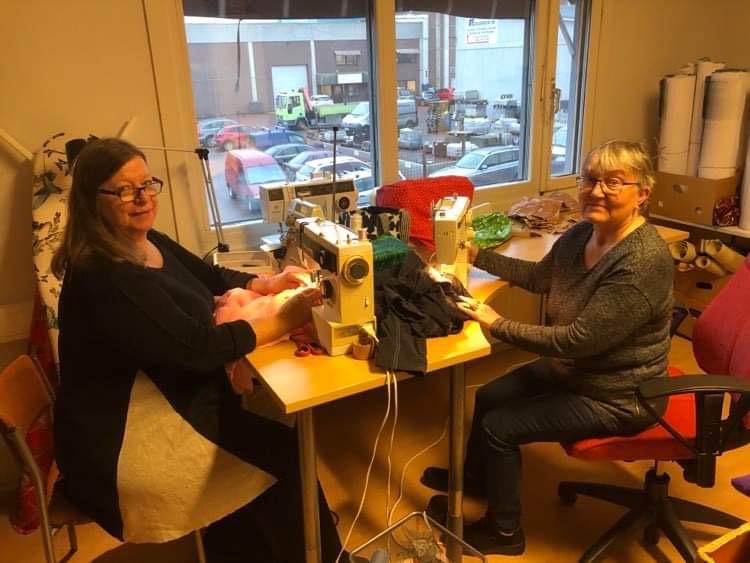
One of many activities at Emmaus Åland is the Repair and Reuse Workshop, where used clothes or new clothes that do not fit well get a new chance and a new life. The idea behind this project is to offer people a social community and participation, primarily through group activities but also ongoing activities at Emmaus.

Emmaus Åland invites, on a regular basis, the customers, and local people to their shop and to their sorting premises in Mariehamn, Finland to bring stuff they keep at home and offer help to repair them. By doing this we can learn from each other, get to know new people, and save the planet by shorten a pair of too long jeans or to repair a loved t-shirt that has a small hole in the fabric.

We are not repairing the clothes for the customers. The customers themselves will do the work, but we advise, assist, and we often need to show them how our old sewing machines works, says Ragnhild Wideman. She became a volunteer at Emmaus Åland for almost twenty years ago and she has been a keen seamstress during the spare time all her life. She is not a professional, but she knows how to use needle and thread and she likes to meet new people.

Camilla Karlsson, responsible for the social projects at Emmaus Åland, sees a lot of advantages with this kind of workshops. It is an intergenerational activity where older persons pass on their knowledge to younger people and they not only learn from each other; they get to know each other as well. The social aspect of bringing people together is important and this is all align with the Åland Development- and Sustainability agenda. – Everybody can contribute what they are good at, says Camilla. This gives an added value to our work. People get together and they help each other to find a solution to various problems and they solve them the during the workshop.

This workshop is also good for the environment. We want people to value their belongings. Instead of throwing away and buying new stuff, we must be better at taking care of what we already have in our wardrobes. To produce a new pair of jeans the production chain will use about 11.000 liter of water and 1,4 kilos of chemicals. To produce a new t-shirt demands about 2.700 liter of water.

A pair of trousers that was too long will now continue to serve in a happy man’s wardrobe in Mariehamn and the yellow t-shirt with a small hole on the chest will have a longer life.

In another part of the Emmaus premises a Carpentry Repair and Reuse Workshop is organized. From the basement we can hear saw blades mixed with laughter and lively conversation. Both female and male participants in various ages are having a good time together. Every Wednesday volunteers, staff and interested local people gather for a few hours to create new products from broken furniture and other old wood. The bird houses, the Christmas goats with a wooden body decorated with spruce twigs and other new products will later be sold at the Emmaus shops and contribute to the solidarity budget.

The people who have participated in the workshops so far are customers, unemployed, elderly, newcomers, EU migrants, people with functional variations, people with mental illness, people with addiction problems, people who have fallen out of the system, asylum seekers and people from the criminal sanction authority. The idea is to include and integrate the project participants in the daily activities at Emmaus. It contributes to a sense of participation among the participants at the same time as it contributes to a sense of meaning in a social context. Depending on the participant’s personal goals, the tasks may also vary. The goals are to be achieved through group activities where the participants get to work with what they are good at, and then move on with more challenging tasks. Discussion groups and workshops can be formed depending on needs. The purpose is to break the feeling of loneliness and the feeling of exclusion.

The need of activities like this, has increased with the Covid-19 pandemic. We can state that the labor market situation today looks different and that the group of unemployed and vulnerable has increased significantly in a short time. The corona pandemic and its restrictions have a visible negative effect on our participants’ mental and physical health. Extremely important factors in maintaining good health are social community, meaningful activities, physical activity, and good eating habits.

Circular economy / The environment  Finland News

© Emmaüs Åland

Emergency in Bosnia-Herzegovina

Fleeing Afghanistan, Syria and Pakistan, thousands of people wanting to seek asylum in Europe have been trapped in North-East Bosnia-Herzegovina since the construction of an anti-migrant border barrier three years ago by Hungary and increased security along the border with Croatia.

Their already very difficult living conditions (they are the victims of violence perpetrated by some of the population and the police, coupled with a lack of accommodation) were worsened by the advent of winter and the fire that gutted the ramshackle Lipa refugee camp.

Thousands of people, including unaccompanied minors, are wandering around in search of makeshift shelter. There is a cruel lack of food, sleeping bags, clothing and footwear suitable for the cold winter weather.

The EU is funding the country to detain the migrants but is doing nothing to receive them and enable them to claim asylum.

The Emmaus Movement has been working in Bosnia-Herzegovina for over 20 years. ISF-Emmaus is providing the migrants with food and material aid in Tuzla and Velika Kaldusa, as well as running a day centre in Tuzla. The group recently set up a centre for 160 unaccompanied minors in Doboj Istok and they are handing out food to 1,200 people from the fire-ravaged Lipa refugee camp.

As the situation is becoming increasingly unsustainable, a fundraising appeal to support local organisations is being launched to reaffirm the values of humanity, shelter and support, and sharing that underpin our work. Emmaus Italy is centralising the donations to help them during these difficult winter months. If you wish to support the work of Emmaus in Bosnia-Herzegovina, you can make a donation by bank transfer to Emmaus Italy’s account:

Emmaus Italia
Iban: IT 13 U 05018 02800 000015118102
Reference: Emergenza Bosnia

70% of the donations received are transferred to FIS-Emmaüs. The remaining 30% is transferred toRivolti ai Barcani, a network with close links to Emmaus, and bringing together various organisations working on the Balkans Route to distribute essential items and defend migrant rights.

Bosnia Herzegovina Defending human rights / Migration  News

Emmaus Alternatives: Solidarity Lockers for the Homeless

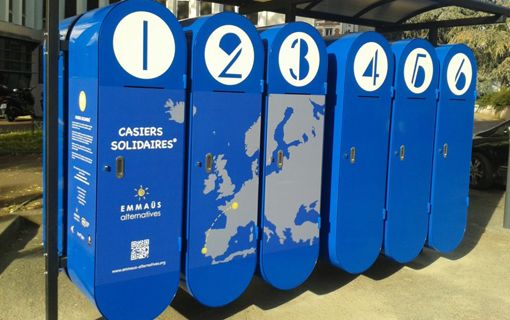
Emmaus Alternatives set up the first system of solidarity lockers for the homeless in all of France. The group worked alongside the authorities in Montreuil (near Paris) and Portuguese association ACA (which started off this scheme in Portugal) to install 12 lockers in October 2018 before adding another 12 in November 2020.

Set up in a public area these designer lockers are available to the homeless 24/7 as long as they have their key. This scheme meets a key need for these people: to have a safe space to store their belongings. The agreement which each member of the scheme includes a weekly meeting to provide social support with a view to getting them reintegrated in society.

This project doesn’t keep people on the streets, it helps to get them off the streets and to reintegrate them in society. The solidarity lockers help meet a fundamental need but the social support and the social bond that is created thanks to the scheme start these homeless people off on a journey which, little by little, will lead them away from the streets.

The solidarity locker scheme was first launched in 2015 in Lisbon following conversations between volunteers from ACA and homeless people in the city. They outlined that it was a daily struggle to prevent their money, documents, clothes and objects which have a sentimental value from being stolen. They needed a safe place to store their belongings.

After spending a long time working on the design with a local company the first solidarity lockers were set up in Lisbon in 2015. In 2018 60 lockers were made available to homeless people as long as they signed an agreement to meet with a social worker once a week. The results of this initiative have been impressive: over two thirds of the people to have left the scheme did so because they found a job or housing or because they joined a rehab centre or a reintegration community.

This simple, fast-acting initiative has been added to the other initiatives led by Emmaus Alternatives since 1991, helping the homeless and those isolated from the job market to access their rights and to find employment. Emmaus Alternatives also strives to make public spaces more welcoming to those who are suffering from exclusion.

To find out more have a look at their website: www.emmaus-alternatives.fr

France News Tackling Poverty / Solidarity

© Emmaüs Alternatives