Emmaus Europe

Emmaus in Bosnia-Herzegovina

Extracts from an interview with Sabina Arnaut-Jahic, national delegate for Bosnia-Herzegovina on the Regional Council of Emmaus Europe.

Can you tell us about how Emmaus began in Bosnia-Herzegovina?

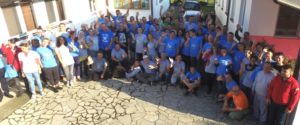
Emmaus was born in Bosnia-Herzegovina in the context of the former Yugoslavia breakup and the consequences of the 1992-1995 war. In this time, the situation was extremely difficult and unstable for everybody in the country. In 1993, the humanitarian organization “Red Crescent” started to work in order to open public kitchen and distribute modest meals to the people.

Abroad, a large number of organizations wanted to help the population of Bosnia-Herzegovina during the war, and one of them was Emmaus International led by Franco Bettoli. They started delivering convoys of aid with food, medicines and other necessities to Tuzla municipality and to do so, they needed a local humanitarian organization to help them over the distribution of aid. That’s how Emmaus International and the Red Crescent started to work together, with an intensive assistance to refugees.

The activists and enthusiasts working in this partnership developed the idea of establishing an association dealing with “Emmaus” activities in Bosnia-Herzegovina. The founding assembly of the humanitarian organization “International Forum of Solidarity – Emmaus” was held on February 10, 1999, with the aim of providing assistance to all vulnerable categories of the population who need help. They defined their mission as “to create, support and vivify resources in which everyone, by being free and respected can fulfil their needs and show mutual solidarity” and their vision as “to act so that every man, every society, every nation can live, demonstrate and achieve trough exchange and share in equal dignity!”

Today, Bosnia-Herzegovina has two Emmaus groups, one full member and one trial member.

What activities/initiatives are led by Emmaus in Bosnia-Herzegovina today?

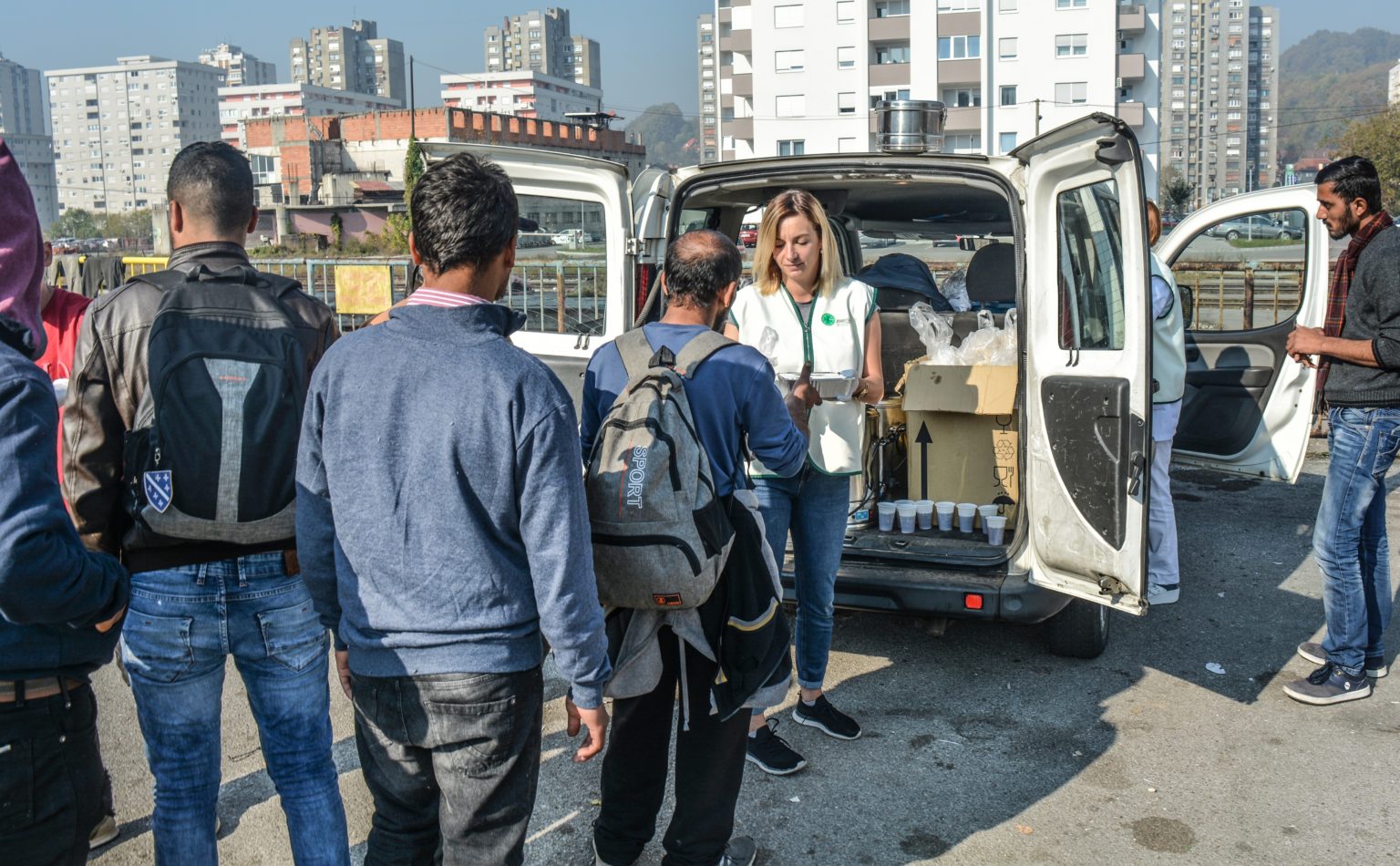
Emmaus groups in Bosnia-Herzegovina implement many activities in the whole country. The groups lead several humanitarian actions to help the most vulnerable people, such as the daily distribution of meals that prepares over 3,500 meals a day in Bosnia-Herzegovina, the direct support to the people who were deeply affected by the war (especially with the loss of their families), or the accommodation of old and helpless people and persons with mental disorders or with disabilities.

One special expertise of the Emmaus groups of Bosnia-Herzegovina is the assistance to the children in diverse ways. Several day care centres welcome children in the country and give them a safe environment to live and a better access to school. This includes support and care to the children’s families. The groups also run services to prevent violence against the children, with hotlines and awareness on safe use of internet.

The groups are also involved in the help to refugees, in Bosnia-Herzegovina as well as abroad. They run a very important centre for the prevention of human trafficking, and also lead several solidarity initiatives in the world, with partners in Africa and Asia.

How have things been going since the health crisis and how did you adapt to the situation?

The Emmaus groups of Bosnia-Herzegovina were very involved in facing the crisis consequences. They developed their distribution of food and sanitary products in areas where no support were in place, and gave medical equipment to health care institutions. The violence against the children rose during this time and many more people used the phone services.

With their good experience of emergency situation, the groups were able to respond quite well, hiring more people to run the emergency solidarity initiatives, adapting all possible activities online and developing new online/phone support services to prevent violence and psychological consequences of the crisis.

What challenges are the groups in Bosnia-Herzegovina facing at the moment?

One special challenge at the moment is the situation of the refugees in the country. Since the beginning of 2018, Bosnia and Herzegovina has experienced a drastic increase in the number of migrants entering the country. Research has shown that migrants in Bosnia-Herzegovina have spent an average of about two years on the road, and some have been on the move for six years. In Una-Sana Canton, main destination for migrants in BH, the reception centres are full, migrants have been living in factory halls for two years and an estimated 7,000 people would be fighting outside the camps. Due to the pandemic and the decrease of available help, an increasing number of migrants do not have food, clothing, footwear and basic hygiene conditions because they mostly live in abandoned buildings or in forests.

In this context, IFS-Emmaus provides one facility as a day centre in Tuzla, where migrants have the opportunity to take a shower, get new clean clothes and eat and rest for a short time. In addition, activities related to the distribution of warm meals will continue, as well as the emergency distribution of non-food items for those on the street. In addition, on October 16, 2020 the group signed the Protocol for the accommodation of unaccompanied minor foreigners who have expressed an intention to seek asylum and unaccompanied minor asylum-seekers in the Centre for Children and Youth in Doboj Istok, with government and other relevant organizations that are involved in process of support aforementioned categories. The accommodation started in mid-November 2020.
Bosnia Herzegovina News

© FIS-Emmaüs

Emmaus Connect: Fighting against Digital Exclusion

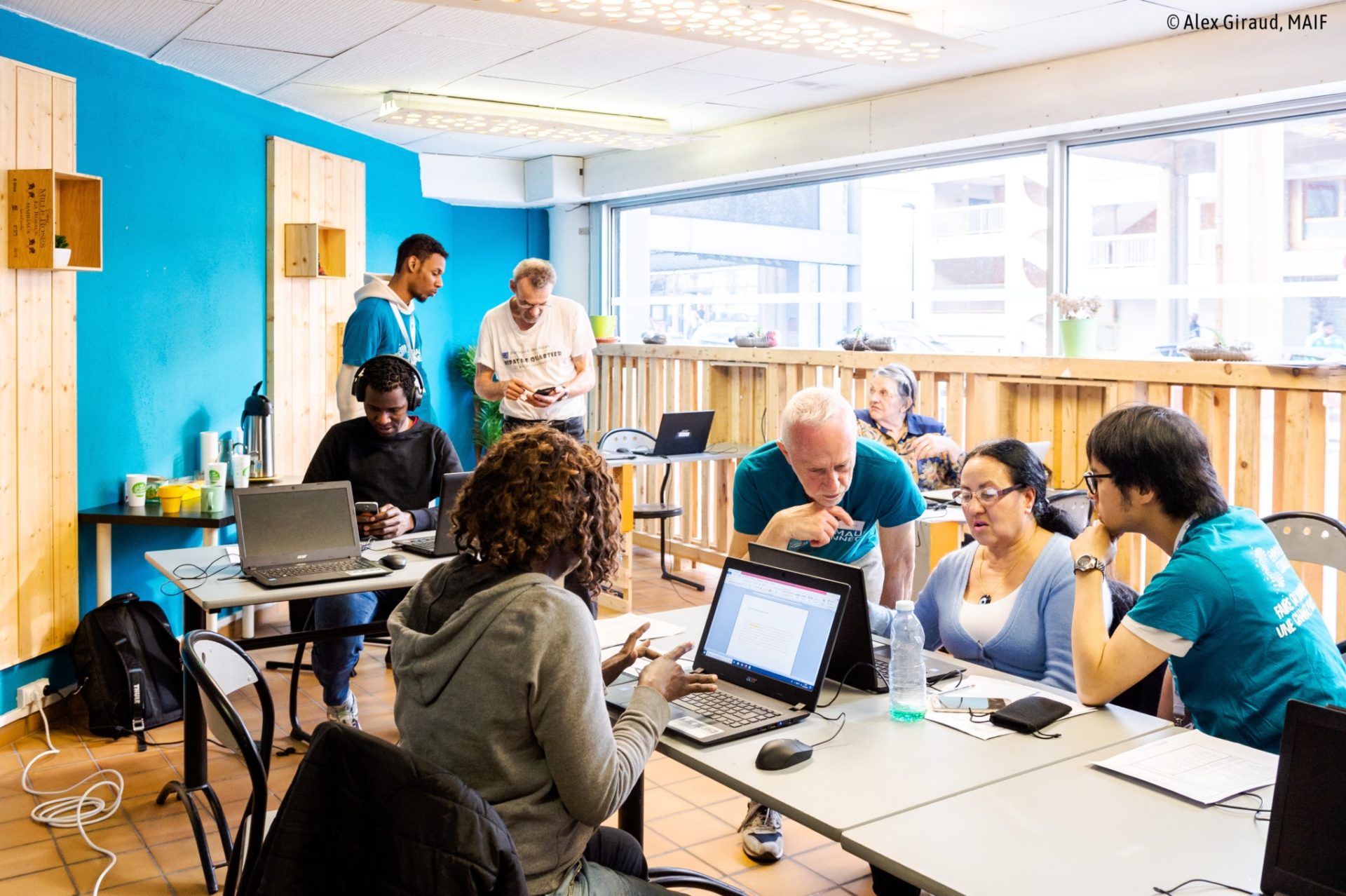
The idea came from an Emmaus group in Paris due to the situation of people in street situations, of people who are poorly housed and/or of people without bank accounts who have to spend huge sums on prepaid cards to be able to get on the Internet.

In France, like in many other European countries, the majority of services related to employment are now only available in a digital form: you need to have Internet access to be able to renew your unemployment benefits or your residence permit. Given that these people are unable to get a long-term subscription it is expensive for them to get online. Furthermore, 24% of French people don’t know how to find information online. This affects the most excluded as well as social workers who have to spend a lot of time helping people to use the Internet for their administrative needs despite never having been trained in how to do this.

In 2013 Emmaus Connect was created and it now has 13 welcome points in France powered by over 500 volunteers.

Thanks to a partnership with a French telecommunications company the group received donations of prepaid telephone and Internet cards which they sell on at low prices to the people sent to them by social workers. Emmaus Connect also provides support to help these people become digitally independent – over 30,000 people have been given such support since 2013.

The group collects IT and telephone equipment from companies and selling this on at low prices helps to finance the support provided to people who need to learn how to use digital tools for work or for admin purposes.

Whenever they receive donated equipment that needs to be repaired Emmaus Connect teams up with Ateliers du Bocage, another Emmaus group which helps people to get back to work by training them to repair IT equipment. During the first, very strict lockdown in France the two groups worked together to equip students and teenagers who were forced to study from home but didn’t have enough money to buy new equipment. They provided equipment to 20,000 people in 1 month.

Now Emmaus Connect is launching a training course for social workers so that they can serve as intermediaries and help to increase the level of digital inclusion in France.

Has this inspired you?

You can find out more at: https://emmaus-connect.org

France News Tackling Poverty / Solidarity

© Emmaüs Connect

For better protection of minimum income for all European citizens

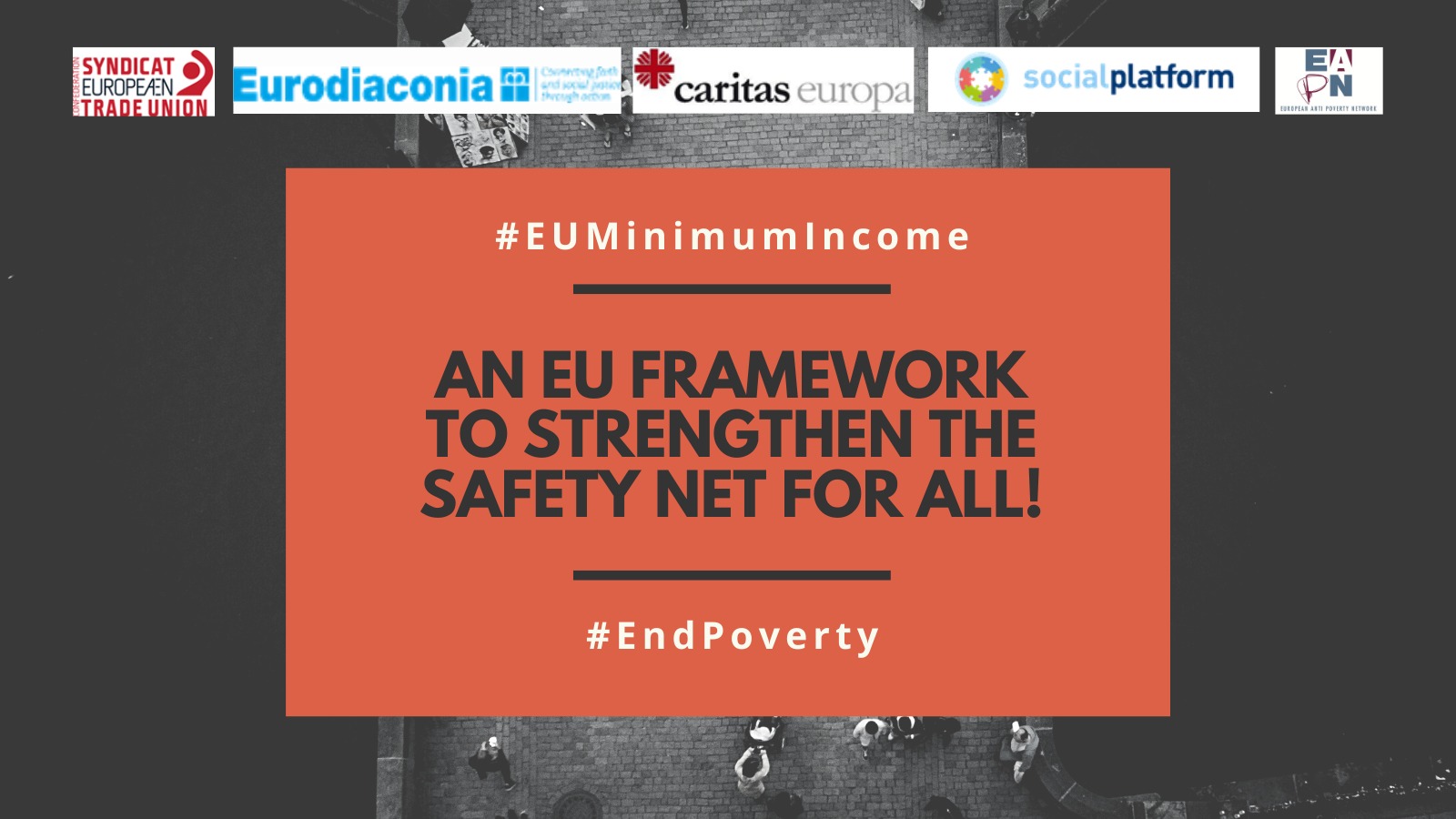
Together with the partners of the European Anti-Poverty Network, Caritas Europe, ETUC, Eurodiaconia and the Social Platform, we add our voices to the Council’s invitation to the Commission to “initiate an update of the Union framework to effectively support and complement the policies of Member States on national minimum income protection”. We hereby present our joint sign-on statement to call for an EU framework to strengthen the safety net for all! We are supported by 45 MEPs, 33 EU-level civil society organisations, 42 academics and the Worker’s Group of the EESC, representing support from throughout the political spectrum, from all over Europe.

Before the coronavirus crisis, one in five people were at risk of poverty and social exclusion. That is nearly 110 million people without enough money to make ends meet and to live a dignified life. This failure to meet the Europe 2020 poverty target threatens the credibility of Social Europe, with millions more expected to be dragged into poverty as a result of the COVID-19 pandemic. This is no time for business as usual.

One of the best ways to prevent people being dragged into poverty is to build individual and societal resilience – and strong social protection systems are the cornerstone of such resilience. In this context, adequate, accessible and enabling Minimum Income schemes have an essential role to play as an ultimate safety net. The EU Council recognised this on 12 October, issuing Council Conclusions on “Strengthening Minimum Income Protection to Combat Poverty and Social Exclusion in the COVID-19 Pandemic and Beyond”.

We know from our work that the lack of adequate, accessible and enabling minimum incomes is a key priority for people experiencing poverty throughout Europe. These Council Conclusions are the long-awaited springboard to move forward on a legally binding Framework Directive on Minimum Income, which would guarantee everyone’s right to an adequate minimum income and enable their full participation in society across the whole life span. We call on the European Commission, and specifically Commissioner Schmit, to respond to the Conclusions by making an ambitious proposal for an EU Framework Directive to guarantee an adequate, accessible, and enabling Minimum Income. #EUMinimumIncome

European Union News Tackling Poverty / Solidarity

Emmaus in Switzerland

Extracts from an interview with Jérémie Udry, national delegate for Switzerland on the Regional Council of Emmaus Europe.

Can you tell us about how Emmaus began in Switzerland?

A conference was given by Abbé Pierre in Bern in February 1956. Marcel Farine and his wife Thérèse were touched by Abbé Pierre’s speech and thus decided, two days later, to launch an operation for donations of funds and merchandise in Bern. They then founded the ‘Emmaus Friends Committee’ in Bern.

The same thing happened in Zurich where the ‘Friends of Abbé Pierre’ association was created around the same time. Marcel Farine was the first Chair of the Emmaus Switzerland Federation and later on, in 1971, he also became Chair of Emmaus International.

In 1957 an Emmaus ragpicking community was created in Geneva. This was the first Emmaus community to be created outside of France. In the canton of Jura the first Emmaus initiatives were launched in 1959 but the Emmaus Jura group was only officially created in 1963 in Boncourt. In 1975 the Étagnières community was created near Lausanne. Next came the community in Sion in 1979, Ticino in 1983, Fribourg in 1985 and La Chaux-de-Fonds in 1987. In 2017 the Emmaus Friends Committee in Bern moved premises and became an Emmaus community.

In Geneva in June 1958 the Emmaus Switzerland Federation was created with the encouragement of Marcel Farine (who became the first Chair of the Federation), Edmond Kaeser and Jean Ziegler. The Emmaus Switzerland Federation was a founding member of Emmaus International and remains a member to this day.

What activities/initiatives are led by Emmaus in Switzerland today?

The role of the Emmaus Switzerland Federation is to coordinate and support the activities led by our member groups as well as to build relationships with partner associations, to lobby politicians, to be part of the debate on the causes of poverty, to create unity amongst our groups, to offer solidarity, to represent the movement and build a relationship with the local, regional and federal authorities as well, of course, as with Emmaus Europe and Emmaus International.

The communities have a duty to welcome any person who is in difficulty and to help them in their social and professional integration in the community. The main activities led by the groups include: collecting materials and repairing what we collect and when necessary we also offer a home collection service. The companions are essential to our Emmaus solidarity shops and feeling useful at work helps these people to recognise their own value.

What are the main challenges for the Swiss groups at the moment?

The main challenge is to strike the right balance between our social mission and the need to make profit to support our organisation (we have no other sources of income). We need to find this balance for the sake of the cohesion of our team.

In the groups we’ve had some recent changes in our management teams and committees. New ideas have since come to the fore and these varying points of view have helped us to challenge things we used to be certain about and to shake things up a little bit.

There has been one issue following the Covid-19 crisis: waste management. Major changes in the sector of waste management are currently underway. Paper and textile are no longer being bought, they are now taxed instead. It is becoming increasingly difficult to find solutions for excess textiles.

How have things been going since the health crisis and how did you adapt to the situation?

Despite the losses incurred due to 2 months of inactivity the groups are getting by just fine for now. During the post-lockdown period our groups received lots of donations and our second-hand shops had plenty of customers.

During the semi-lockdown period some of the communities received financial support from a Foundation. The number one concern for the communities now is the risk of being put in isolation by the authorities.

At the general assembly of the Swiss federation, due to the great recovery in our groups following the crisis, we decided to contribute all profits made on Friday 9 October in the Emmaus shops across Switzerland to the International Covid-19 Emergency Fund. There was a round of applause when this decision was taken!

News Switzerland