Emmaus Europe

Emmaus in Italy

Based on an interview with Marie Balseca, the Italy national delegate on the Regional Council of Emmaus Europe, and Franco Monnicchi, the President of Emmaus Italy.

Can you tell us about the early days of Emmaus in Italy?

In the late 1960s, a handful of young Catholics who no longer agreed with traditional charity decided to live in a different way with poor people who were making a living from recycling. In December 1962, one of them, Vincenzo Benciolini, returned from France, where he had spent several months in various Emmaus communities, and set up the Verona “community of ragpickers”.

How did Emmaus develop in Italy?

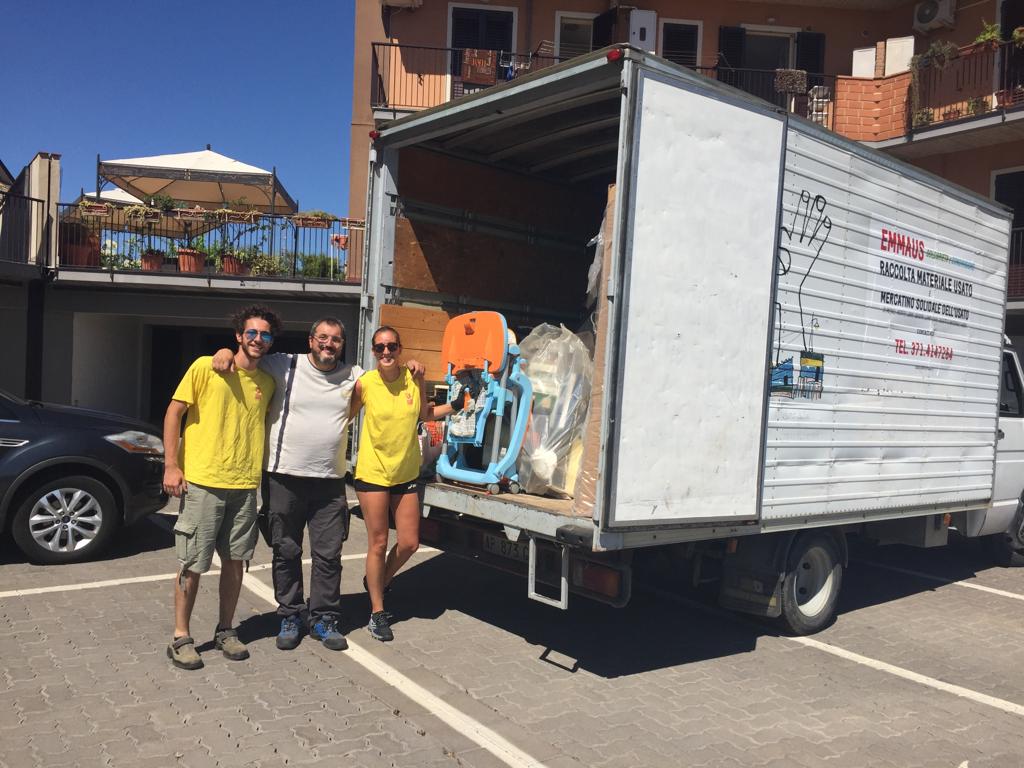
A few years later, in 1967, Emmaus international work camps were held in Northern Italy. These work camps were a fantastic opportunity to interact, meet people from other cultures, and open up to others, while undertaking a useful activity together. The success of this initiative contributed to the development of Emmaus in Italy. There are now 27 Emmaus charity shops in the country, as some communities have several shops each. In general terms, including paid employees, Emmaus Italy amounts to over 550 people involved in the movement. And we are continuing with the youth camps: one of their notable recent achievements was setting up a new group in Palermo!

What are Emmaus’ main income-generating activities in Italy?

The groups primarily do the traditional Emmaus work of collecting, reusing and selling unwanted goods. It is difficult to calculate the number of tonnes of goods collected per year. And the percentage reused and recycled varies greatly from one community to the next. The figure can range from 30-60% of goods recycled and put on sale.

You are heavily involved in defending human rights. Can you give us some examples of initiatives that you undertake in this area?

During the school year and the summer camps, one of Emmaus Italy’s activities is training and awareness-raising about social issues, such as: migration, the mafia, and human trafficking. Emmaus Italy also supports the Mediterranea maritime search and rescue operation. The initiative primarily aims to show solidarity with migrants in the Mediterranean and denounce European governments’ migration policies. In October 2018 Mediterranea launched the Mare Jonio, an Italian-registered rescue and monitoring ship. Thanks to the support of other European groups and the backing of EE and EI, Emmaus Italy has helped fund the ship and is now a member of the initiative. The campaign is continuing to this day! Website link

What are the issues currently facing Emmaus in Italy?

At the present time, the national organisation is facing amendments to the third sector reform (the Riforma del Terzo Settore). These institutional changes are forcing us to rethink and change the way we work.

The current crisis has not affected our commitment to the most vulnerable communities. We have managed to face up to this situation thanks to internal solidarity and an appeal for donations made to the general public and foundations. We have also stayed standing shoulder to shoulder with organisations that fight for human rights. Our partnership with Mediterranea always makes us think about Global North-South relations, weapons sales, refugee law, and freedom of movement.

Furthermore, this crisis has raised the issue of the fragile health system and, at the same time, the importance of promoting social justice and championing the common good.

More information: interview with Franco Monnicchi for Emmaus International
Italy News

© Emmaus Italy

What will the Emmaus Summer Camps be like in 2020?

Despite the pandemic the Emmaus groups in Europe are adapting in order to organise their summer camp events for as many people as possible.

Summer is here which means the Emmaus summer camps are back too! Emmaus groups across Europe open up to the general public in the summer months and to young people in particular, offering a fantastic experience of volunteering in the Emmaus communities, encouraging the participants to get involved in the movement and to discover the movement’s principles and values. Given the exceptional circumstances this summer the majority of the groups have had to adapt their plans for the camp events in order to create safe conditions for the volunteers.

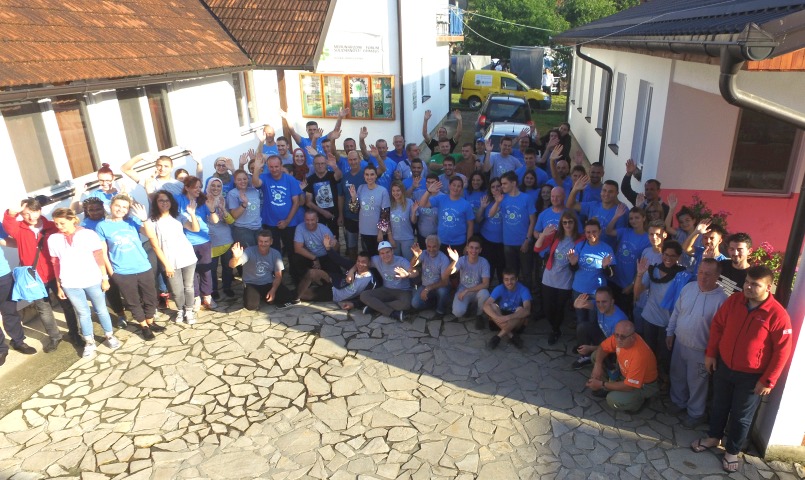
Despite the ongoing travel restrictions in many countries the groups La Poudrière (Belgium) and FIS (Bosnia-Herzegovina) are inviting all those who are allowed to travel to the groups to their camp events. The two groups wish to run as normal as possible an event, whilst taking all appropriate preventive measures.

The French groups and their national organisation, Emmaus France, have decided to work on a different format for the 2020 camps in order to meet the high demand from volunteers wishing to get involved and support the movement. Local volunteering will be encouraged in order to reduce long-distance travel and gatherings but face-to-face events will still be allowed. In parallel the French are looking into the options for online events in order to maintain the bonds with their international volunteers and they are also organising remote volunteering assignments for all appropriate activities.

Unfortunately some groups in Europe have had to put the welcoming of foreign volunteers on hold for now. This is the case for Emmaus Åland (Finland) which has had to put registration for its summer event on hold whilst waiting for further information from the authorities about the easing of the current travel restrictions to the Åland islands. In Italy, where summer camps are generally very successful, the groups have had to take the difficult decision of cancelling the events this year.

We shouldn’t forget that whilst the spread of the epidemic which hit the world in spring now seems to be slowing in Europe other regions are still in the eye of the storm. Whilst travel and gatherings remain uncertain this year the Emmaus groups from across Europe look forward to welcoming back volunteers as soon as the health situation allows it, whether that be this summer or at a later date.

News Tackling Poverty / Solidarity

© FIS-Emmaüs

Emmaus in the UK

Based on an Interview with Sue Taylor President of Emmaus UK and National delegate for UK at Emmaus Europe’s regional Council.

Can you tell us more about the beginnings of Emmaus in the UK?

In the late 80, in Cambridge, some volunteers distributed midnight soup to street people when one of them cried “We don’t need food, we need work.” One of these volunteers, Selwyn Image, suddenly remembered the 60’s and his several-month stay as a volunteer at the Emmaus Neuilly-Plaisance community in France. He made contact with Emmaus International and launched the first ragpickers community in Cambridge in 1991.

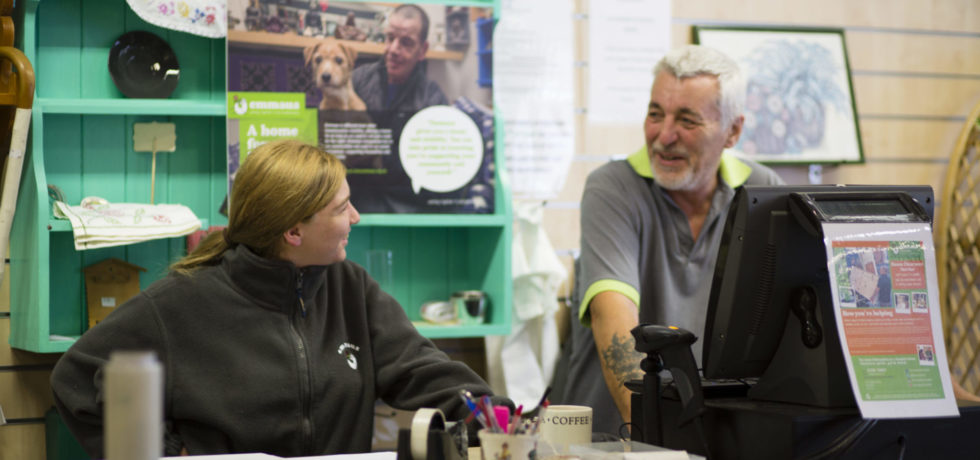
Today most communities offer between 20 and 40 places for people to live. No two Emmaus communities are the same – each has its own individual personality, providing a set of services that meet the needs of its local area. Each one has at least one shop or social enterprise, with many running successful cafés, shops, gardening projects and removal companies. Together, they work to overcome homelessness and social exclusion while using the voice of Emmaus to achieve social change.

In UK Emmaus represents a different way to fight against homelessness, please tell us more.

Often, the view people have of someone experiencing homelessness in the UK is of a person sleeping in a shop doorway or on a park bench, but there are also huge numbers of people staying with friends or sofa-surfing. This is the side of homelessness in the UK we might not see, but it can have just as devastating an impact on the lives of the people going through it.

Much of the support that is available is only able to provide a bed for the night and a hot meal, but the next morning they are back on the streets again. This doesn’t necessarily give the individual the opportunity to address the root cause of their homelessness and find a long-term way to overcome it.

This is where Emmaus in the UK is different from other support providers with our unique model offering a home as well as meaningful work in our social enterprises. This opportunity, to become part of a community and make a contribution to it, plays an important role in restoring self-esteem and helping companions to find a way to overcome homelessness in the long term. Our social enterprises are an integral part of community life and help us to generate the income that will ultimately make each of our communities self-sustaining, something every community is working towards. But for the moment our activity is also supported by our local authorities paying towards our companions housing costs while they live within our community and by private donors. Our national organisation is an essential support for fundraising and communication.

What are the main business activities of Emmaus in the UK?

The main business activity for Emmaus communities is collecting donated furniture and household goods and selling them in our shops. Some items are refurbished or, in the case of electrical items, PAT tested for safety. Our research shows that 79% of companions who have lived at Emmaus for a few months say that working and having something to do every day has been the most beneficial part of their experience.

The backbone of Emmaus social enterprise in the UK is the sale of second hand furniture but we also operate cafés, house clearance businesses, gardening projects and clothing shops. Communities and groups also operate bulky waste collection services or provide outreach support contracts with their local authorities. Many Emmaus communities also “upcycle” old furniture, re-painting and re-upholstering it to give it a new lease of life before it is sold on. This gives Emmaus companions the opportunity to gain new skills or use their existing creative flair to bring something back into use.

What is you approach of companion training and development?

During their time living in an Emmaus community, companions are encouraged to undertake training and wellbeing activities for their personal and professional development. Emmaus supports companions in pursuing their goals; holistically and financially. Last year, Emmaus companions were supported to complete 1850 training courses. The types of activities can include formal courses and qualifications, training, sporting activities, visits to other Emmaus communities in the UK and abroad, etc.

These opportunities can help companions to develop new skills (or build on existing ones), boost their confidence, improve mental and/or physical health and wellbeing, and increase employability. Recent achievements include companions learning to drive, gaining a qualification in upholstery, qualifications in furniture making, a forklift truck licence, visits to overseas communities, a baking course, horse riding lessons, and many more.

News United Kingdom

© Emmaüs Colchester

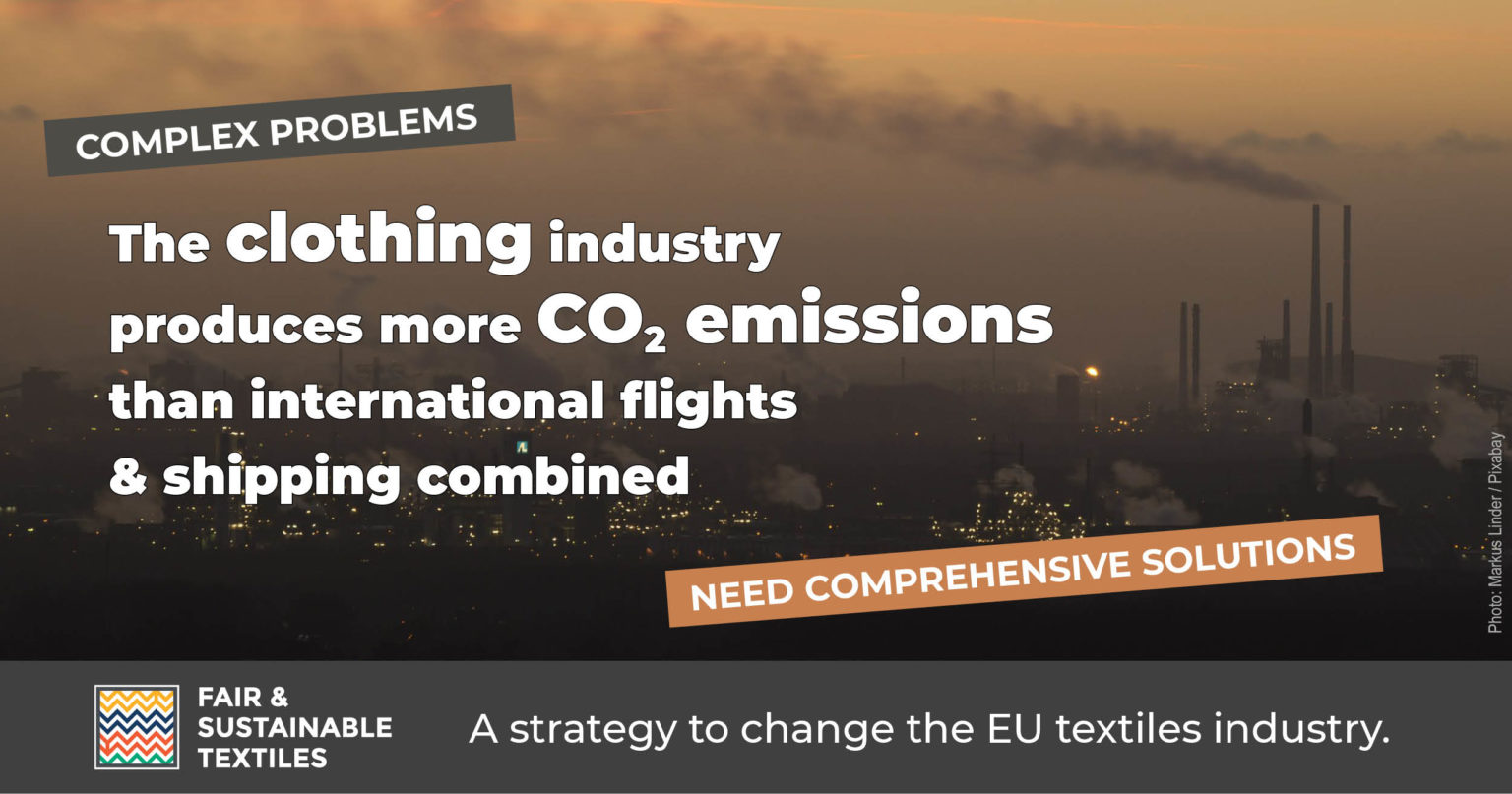
Coronavirus strengthens case for new EU textile laws

65 civil society groups publish joint vision.

As the European Commission is poised to start developing a new ‘comprehensive strategy for textiles’ in the coming months, Emmaus Europe and a group of more than 60 civil society organisations have set out their vision for the global Textile, Garments, Leather and Footwear (TGLF) sector.

We are calling on the European Commission, MEPs, and EU governments to back an ambitious strategy that will kick-start a global re-design of the textile industry’s broken business model for the post-coronavirus world.

The TGLF sector has long been characterised by labour rights and human rights abuses along with the immense pressure it exerts on our environment and climate.

The European Union has committed to create a strategy for the textiles sector that aims to address environmental sustainability and human rights issues.

Our proposal for a comprehensive EU Textile Strategy contains recommendations in this objective, including:

  • Ensure companies are legally obligated to take responsibility for not only their own activities but their whole supply chain by applying an EU due diligence law across all sectors, including specific requirements for the TGLF sector. Signing a multi-stakeholder partnership should not exempt business from responsibility.
  • Stricter environmental rules that cover how textile products sold in the EU are designed and produced, legal and financial responsibility on producers for when their products become waste and a reuse policy that involve the social and solidarity economy actors.
  • Ensuring brands and retailers are legally obliged to honour contracts and end the culture of unfair purchasing practices that gives them impunity to cancel orders without honouring payments – leaving workers without pay and a wasteful pile up of unsellable products.
  • Make governance reforms and better law enforcement in producing countries part of the solution to sustainability issues faced in the TGLF value chains.
  • Through trade policy, use EU market power to leverage sustainable production practices in the TGLF industry.
Circular economy / The environment  European Union News